Participants
- Riet Wijnen, Linda van Deursen, Waysatta Fernández, Salvador Núñez, Jari Nuno, Ima-Abasi Okon, Jan Wijnen
Curators
Network
Series


With Linda van Deursen, Waysatta Fernández with Salvador Núñez from Mono Rojo, Fat Crayon Creative/Jari Nuno, Ima-Abasi Okon, and Jan Wijnen.
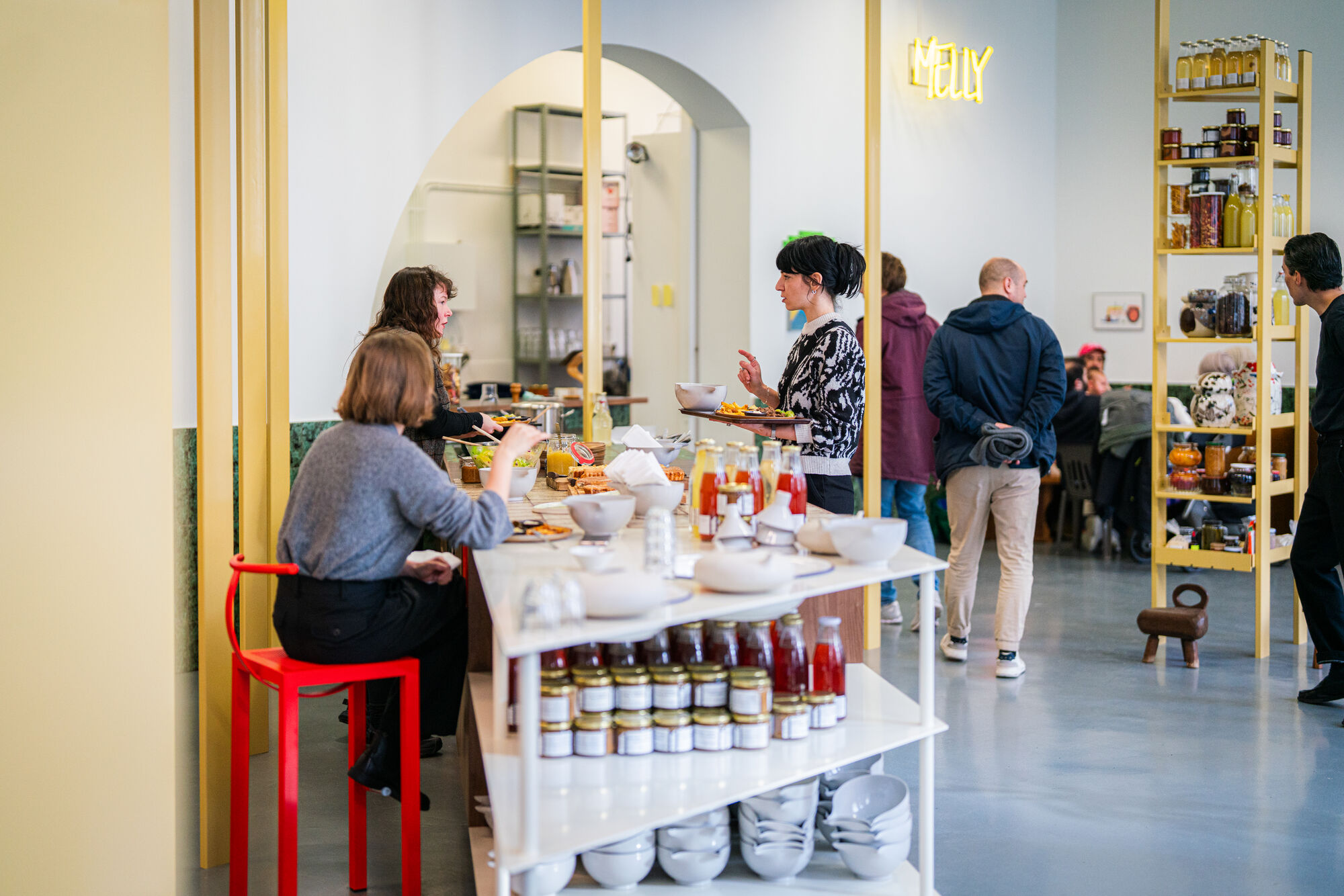
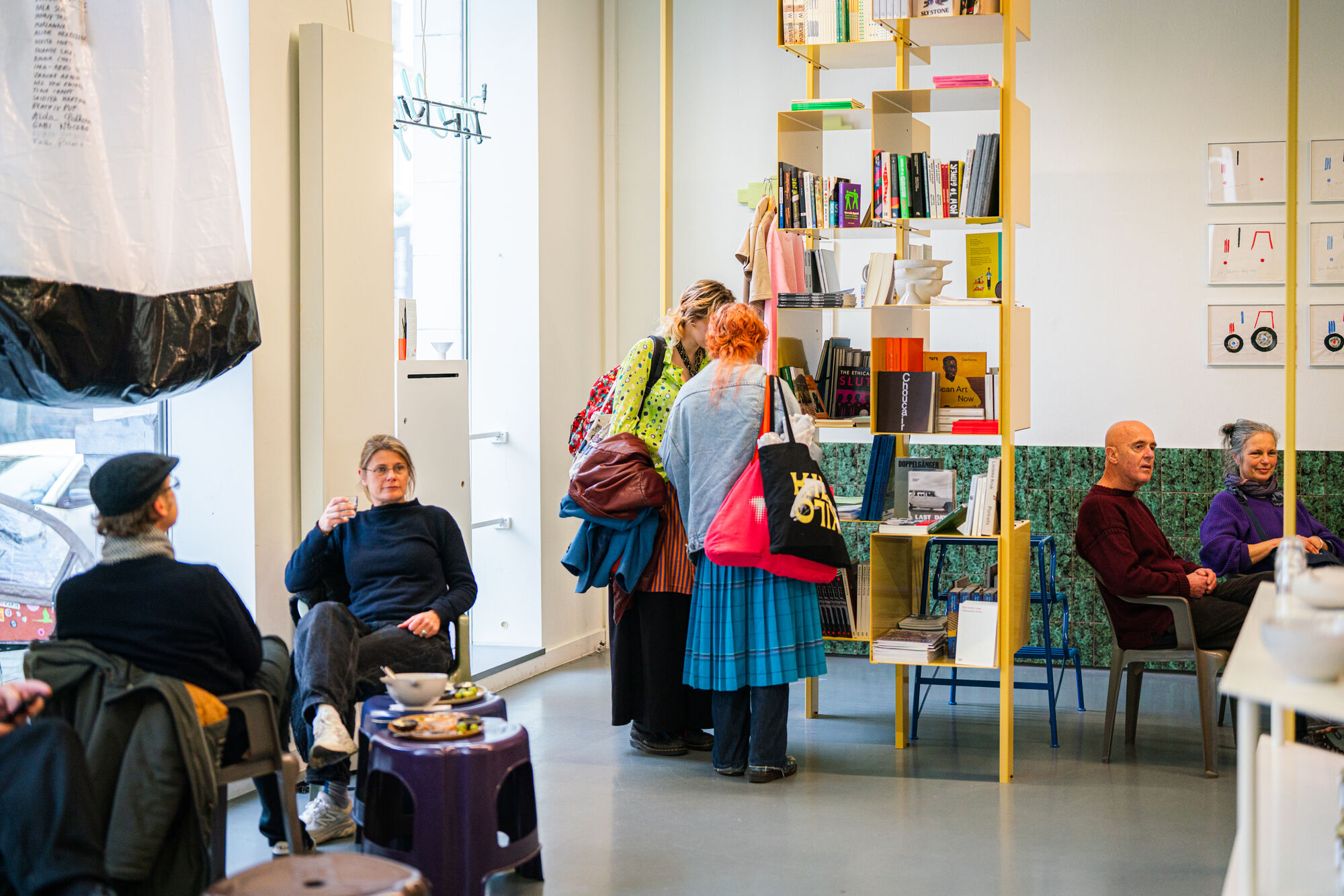
Suitcase Economy is the third edition of Tools for Conviviality, a framework in which we continue our work of reimagining our MELLY ground-floor bookstore, café, and event space as a welcoming, free, social area. With evolving artistic interventions, the space invites gathering, listening, meal-sharing, conversing, and creating together.
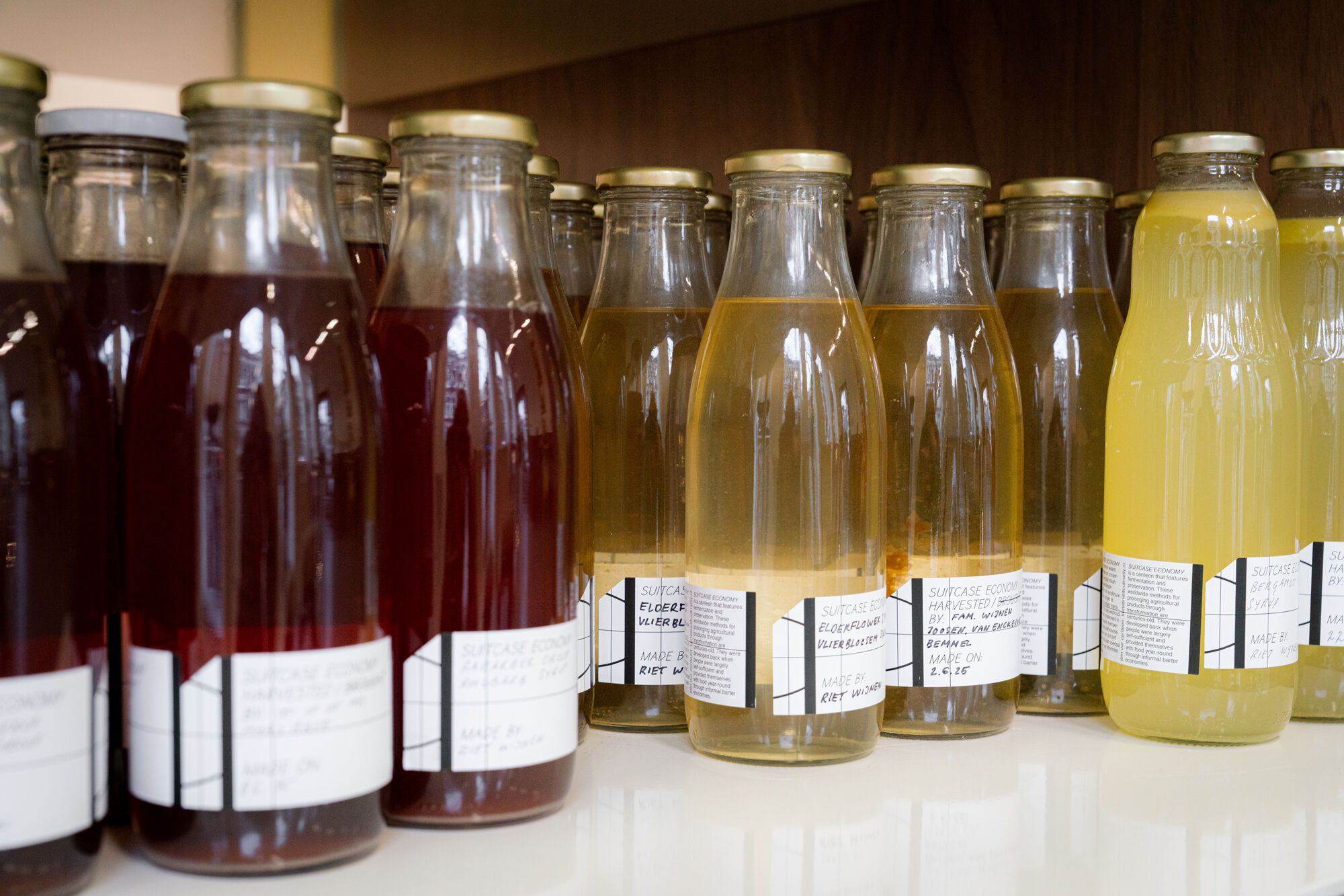
An experimental canteen, Suitcase Economy, is a year-long project developed by artist Riet Wijnen in collaboration with fellow artists, designers, and family. The project is shaped by the movement of produce carried in suitcases from one place to another, inspiring a bartering of food products whose lifespan is extended through methods of fermentation or preservation. During workshops and study sessions, these processes of transformation will be extrapolated to think about history, territory, and health.
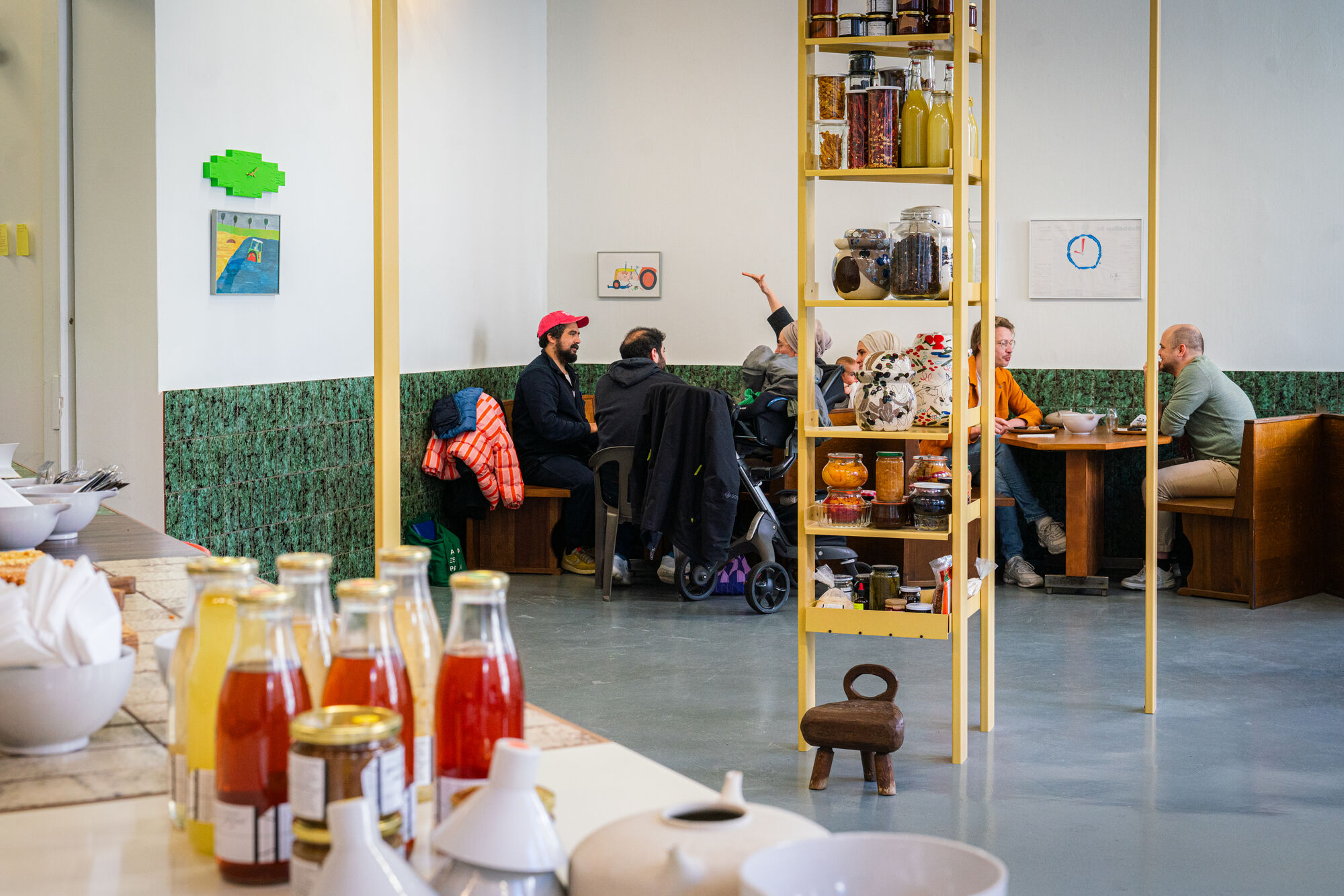
A yellow triangular structure cuts the canteen into sixteen lines. The structure is inspired by Riet’s ongoing series Sixteen Conversations on Abstraction, a project that investigates overlooked and not yet known histories of abstraction. In this series, location is represented by yellow, while time is depicted by green.
The stackable sculptural tableware relates to the practice of the late Lebanese artist Saloua Raouda Choucair (1916-2017). Riet embodies formal aspects and methodologies that Choucair applied in her work. She is interested in how the
omnipresent traditions of fermentation and preservation extend the lifespan of agricultural products, and what this teaches us about the maintenance of histories across time and place.
Rotterdam-based fashion brand Fat Crayon Creative transformed the Boomgaardsstraat window into a ‘backdoor’ of Suitcase Economy, similar to how informal economies avoid super-markets and customs. The canopy welcomes the relations and economies moving into the space. Designed by Linda van Deursen, the labels, recipe cards, and a bag with credits documenting these informal networks as they are developing over time.
Waysatta Fernández created drawings for the canteen’s fermentation pots, thrown by Salvador Núñez from Mono Rojo. The drawings extend Waysatta’s understanding of territory through processes of interdependence, symbiosis, and diversity. Countering a longstanding tradition of transforming territory into property, fermentation, and preservation support self-sustainability and resist the capitalist logics of food production.
Ima-Abasi Okon is interested in the potential of the fermentation process to draw out and make available the healing properties of plants, attending to alternatives to the health industrial complex, which is reputed to be violent. With Riet, she will develop a series of kombucha-based fermented hot sauces as condiments for Suitcase Economy.
On the wall, ceramic clocks by Riet alternate with drawings by her farmer father Jan Wijnen made during his years of suffering from manic depression while turning toward biodynamic farming. Farm-related imagery is alternated with depictions of his own time and the experience of running out of time, as in one of his paintings titled ‘No Time’.
Bring your lunch, enjoy the condiments, and order homemade staples of Suitcase Economy like elderflower, and rhubarb syrup!
Knives and pans are gifted by BARE Cookware. The tableware of Suitcase Economy is supported by Mondriaan Fund, Amsterdam Fund for the Arts, and European Ceramic Work Centre. Suitcase Economy is supported through funds from Droom en Daad Foundation.
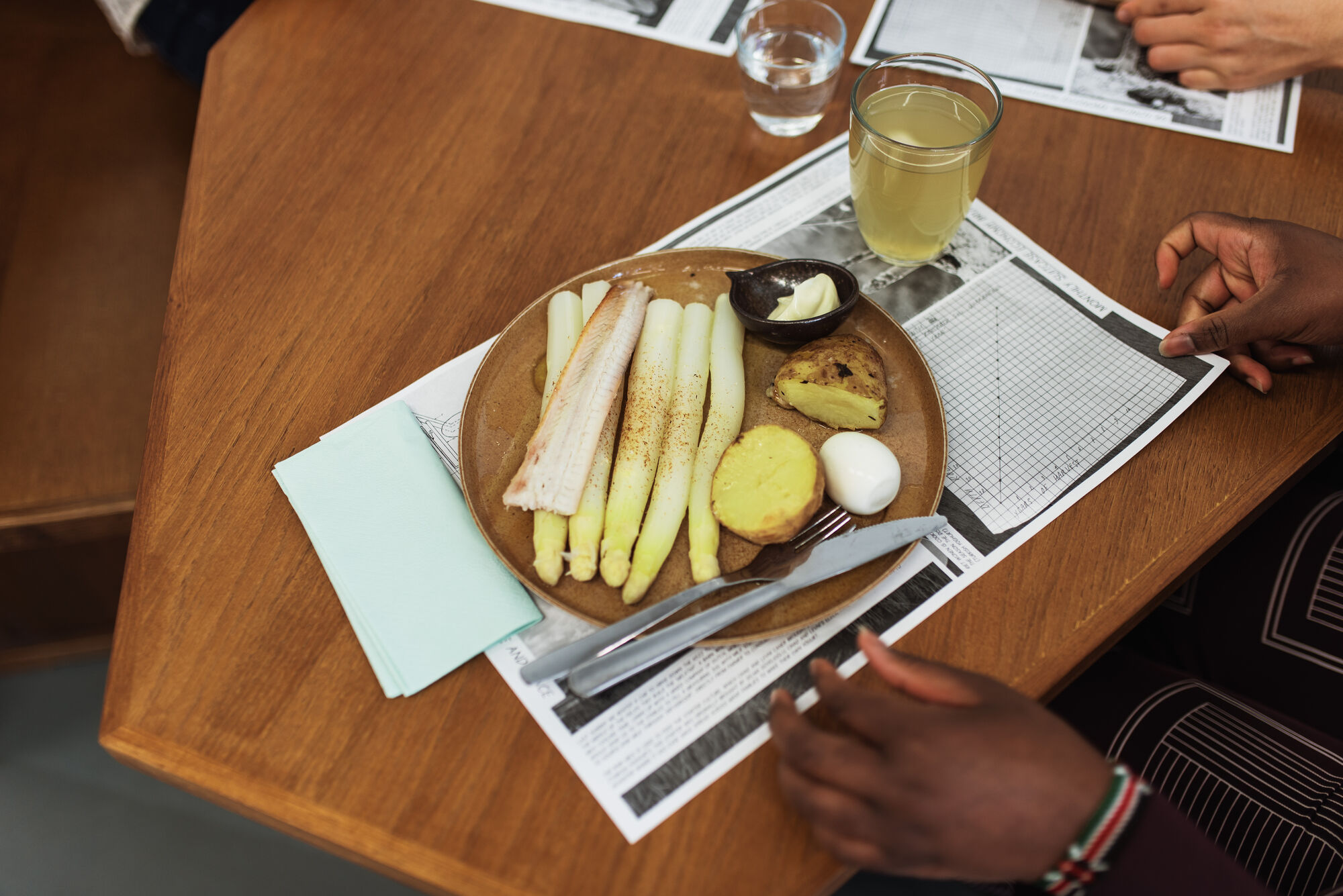
Monthly Suitcase Economy Brunch is a testing ground for experimenting with relationships, translation, economic models, transformation and time through the preparation and serving of food. In this series, artist Riet Wijnen is developing a method to build connections among different local daily contexts, past and present, by researching local histories of preservation and fermentation.






Kunstinstituut Melly will be closed to visitors from 5 to 23 October as we prepare the building for the opening of You will find us in the best places on 24 October.