Participants
Series


Monthly Suitcase Economy Brunch is a testing ground for experimenting with relationships, translation, economic models, transformation and time through the preparation and serving of food. In this series, artist Riet Wijnen is developing a method to build connections among different local daily contexts, past and present, by researching local histories of preservation and fermentation.
These centuries-old methods for extending the lifespan of agricultural products through transformation are evident in the practices of various cultures. As people moved around, these preservation and fermentation methods spread and evolved. For example, sauerkraut is based on the Chinese tradition of preserving cabbage in rice wine. These methods were developed when people were largely self-sufficient, relying on informal barter economies to provide themselves with food year-round.
Each brunch involves a process of fermentation or preservation and an ingredient transported from one place to another via suitcase. The menu predominantly features food from Limburg, a province in the south of the Netherlands where the artist was raised, South Korea and South Africa. The specific regions in these two countries will be determined by collaborators of the Monthly Suitcase Economy Brunch series.
For Monthly Suitcase Economy Brunch #7, Donghwan Kam proposed a meal prepared by Riet. Memil guksu (메밀국수), cold buckwheat noodles, with deulkkae-garu (들깨가루), toasted and ground perilla seeds, and deulgireum (들기름), perilla oil, is served along with baek-kimchi (백김치) prepared with elderflower brine and chopi (초피). If the milled malted barley arrives on time by post from Seoul, sikhye (식혜), a sweet rice punch, is served for dessert; otherwise, yakgwa (약과), a honey pastry.
Baek-kimchi, which translates as white kimchi, is the oldest kimchi, going back over 2000 years. This early version of kimchi was vegetables pressed under salt brine in jars, kept in the ground throughout the winter. The fermentation process relies on the naturally occurring Lactobacillus bacteria that thrive in a salty, oxygen-free environment, converting sugars from the baechu (배추), napa cabbage, into lactic acid. The lack of red chilli flakes, gochu (고추), creates a brine that is light, subtly sweet, tart, and packed with gut-friendly probiotics.
Last week, on a dry sunny day, we foraged the fully open elderflowers, which were releasing their pollen and soaked them overnight in the water used for the brine of the baek-kimchi. This harvesting season for the flower of the Common Elder typically lasts in the Netherlands only from late May to mid June.
Sikhye and yakgwa are desserts often served during holidays such as Chuseok, a Korean mid-autumn harvest festival which occurs on the 15th day of the 8th month of the lunisolar calendar, on the full moon, and Seollal, which commemorates the first day of the Korean lunisolar calendar.
We will serve iced tea with lemon, verbena and elderflower or rooibos and rhubarb, made with the staple syrups of Suitcase Economy.
10 euros, or 5 euros (drinks not included) if you bring either a homemade fermented or preserved product, the recipe for it, harvested produce from your own garden, or a specific ingredient for cultural dishes.
11:00-15:00, or until we run out
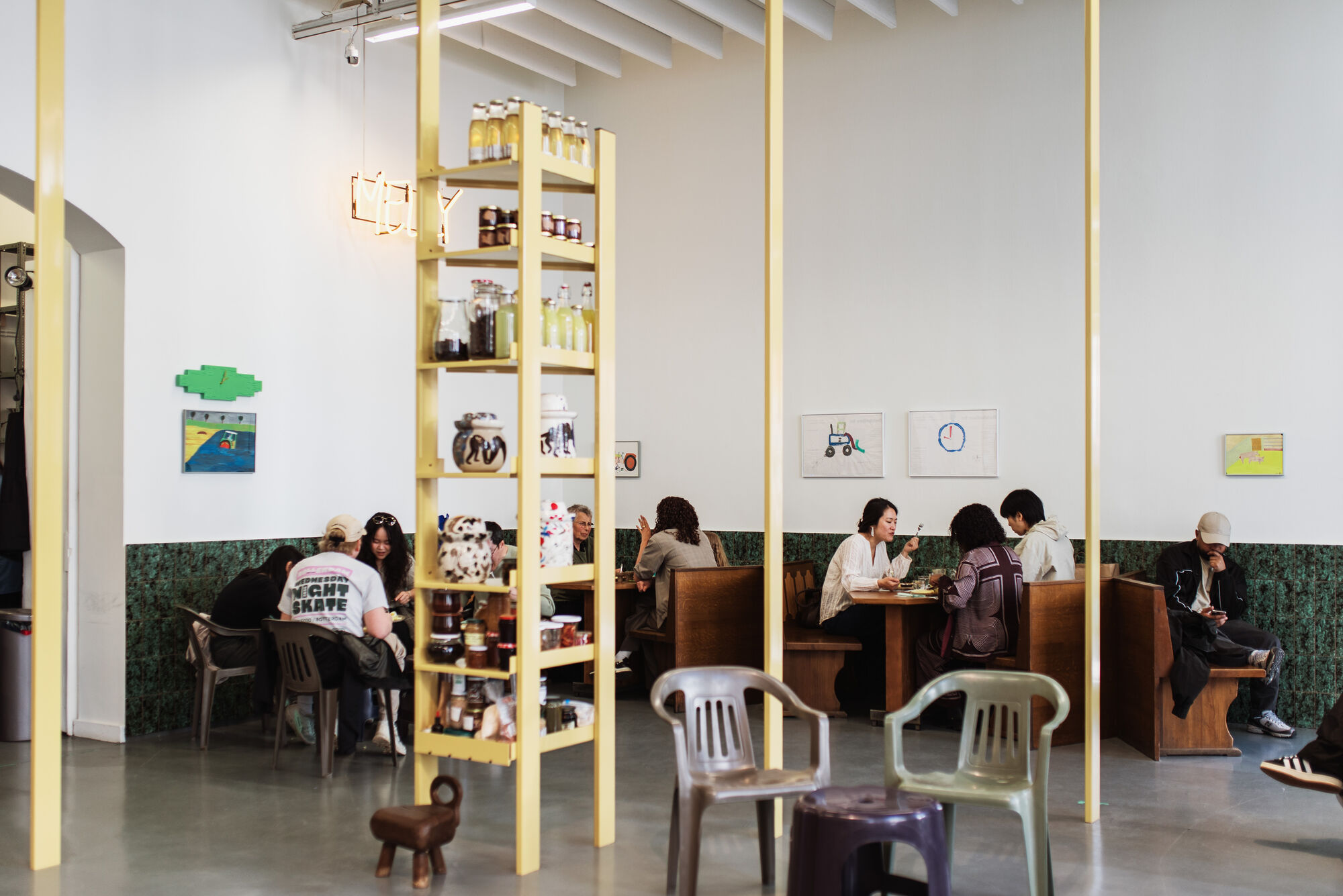
Suitcase Economy / Ground Floor, Kunstinstituut Melly, Witte de Withstraat 50, Rotterdam
* Monthly Suitcase Economy Brunch #7 is made with deulkkae (들깨), perilla seeds, and deulgireum (들기름), perilla oil are brought from Seoul via Venice by Donghwan Kam and 茶姬釀造醬油, soy sauce brought from Taipei by Emily Shin-Jie Lee.

Kunstinstituut Melly will be closed to visitors from 5 to 23 October as we prepare the building for the opening of You will find us in the best places on 24 October.