Participants
Series

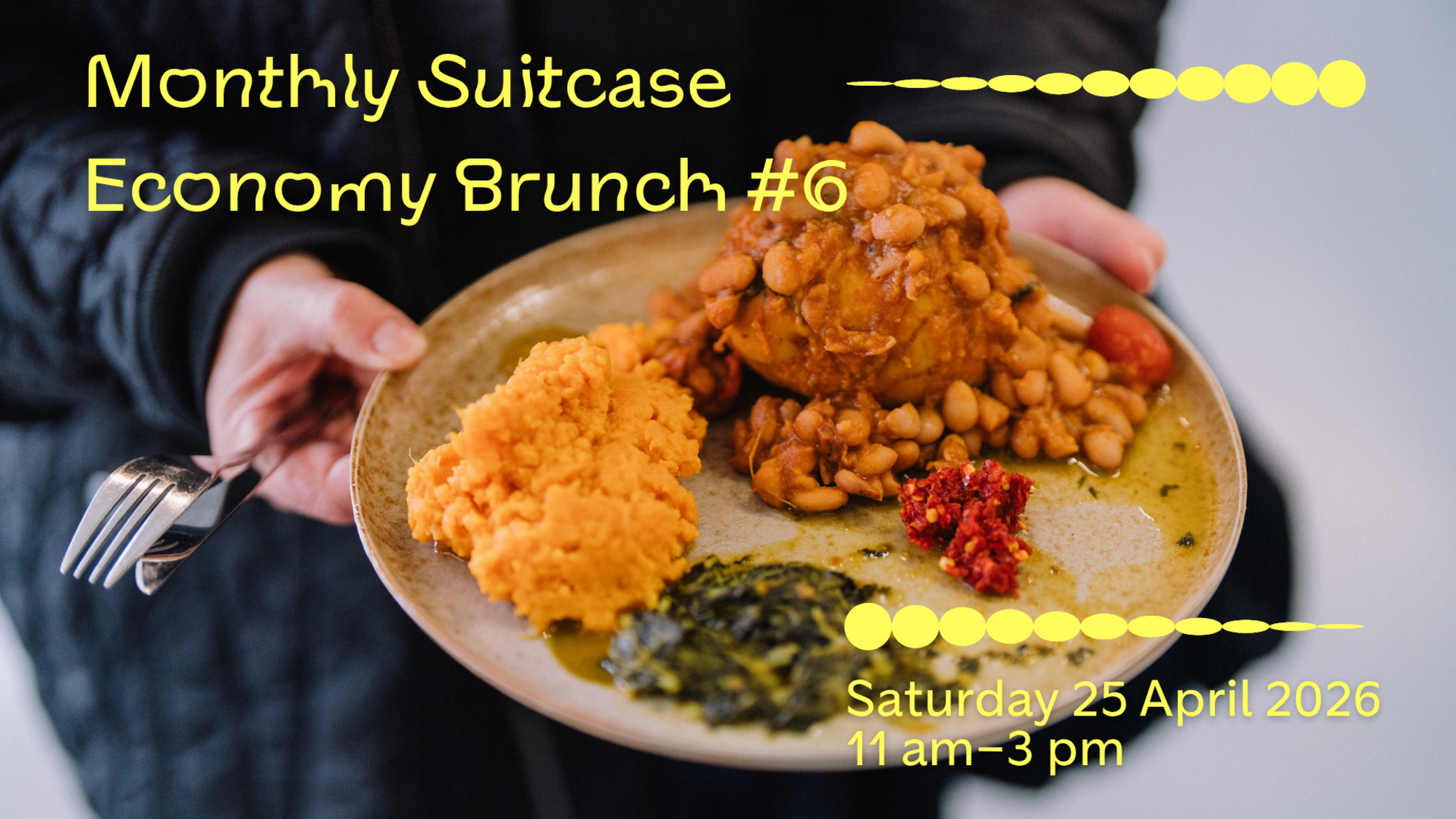
Monthly Suitcase Economy Brunch is a testing ground for experimenting with relationships, translation, economic models, transformation and time through the preparation and serving of food. In this series, artist Riet Wijnen is developing a method to build connections among different local daily contexts, past and present, by researching local histories of preservation and fermentation.
These centuries-old methods for extending the lifespan of agricultural products through transformation are evident in the practices of various cultures. As people moved around, these preservation and fermentation methods spread and evolved. For example, sauerkraut is based on the Chinese tradition of preserving cabbage in rice wine. These methods were developed when people were largely self-sufficient, relying on informal barter economies to provide themselves with food year-round.
Each brunch involves a process of fermentation or preservation and an ingredient transported from one place to another via suitcase.* The menu predominantly features food from Limburg, a province in the south of the Netherlands where the artist was raised, South Korea and South Africa. The specific regions in these two countries will be determined by collaborators of the Monthly Suitcase Economy Brunch series.
For Monthly Suitcase Economy Brunch #6, Riet is cooking with her mother, Nel van Enckevort, to prepare the first asparagus of the season. The dish is served with smoked ham or eel, egg, and new potatoes. For dessert, Turkish yoghurt is served with poached rhubarb.
The ham and eel are preserved through the processes of moisture extraction, salting, drying, and eventually smoking. Turkish yoghurt is made by heating raw milk and mixing it with a starter culture. During fermentation, the lactic acid bacteria in the starter converts lactose in milk into lactic acid, creating an acidic environment that inhibits the growth of spoilage microorganisms and pathogens.
Asparagus is a perennial plant that can be harvested for 8 to 10 years. In Europe, the stems are harvested from late April to mid-June, allowing the plant to regenerate for the following year. Following the Second World War, white asparagus has been primarily grown in North Limburg in the Netherlands. Its low-nutrient, light, sandy soil is well suited for the roots to grow up to 1 meter deep; every 10cm of rootable soil guarantees one year of harvest.
Next to the elderflower and rhubarb syrup, staples of Suitcase Economy, we also serve lemon and grapefruit kombucha.
10 euros, or 5 euros (drinks not included) if you bring either a homemade fermented or preserved product, harvested produce from your own garden, or a specific ingredient for cultural dishes.
11:00-15:00, or until we run out
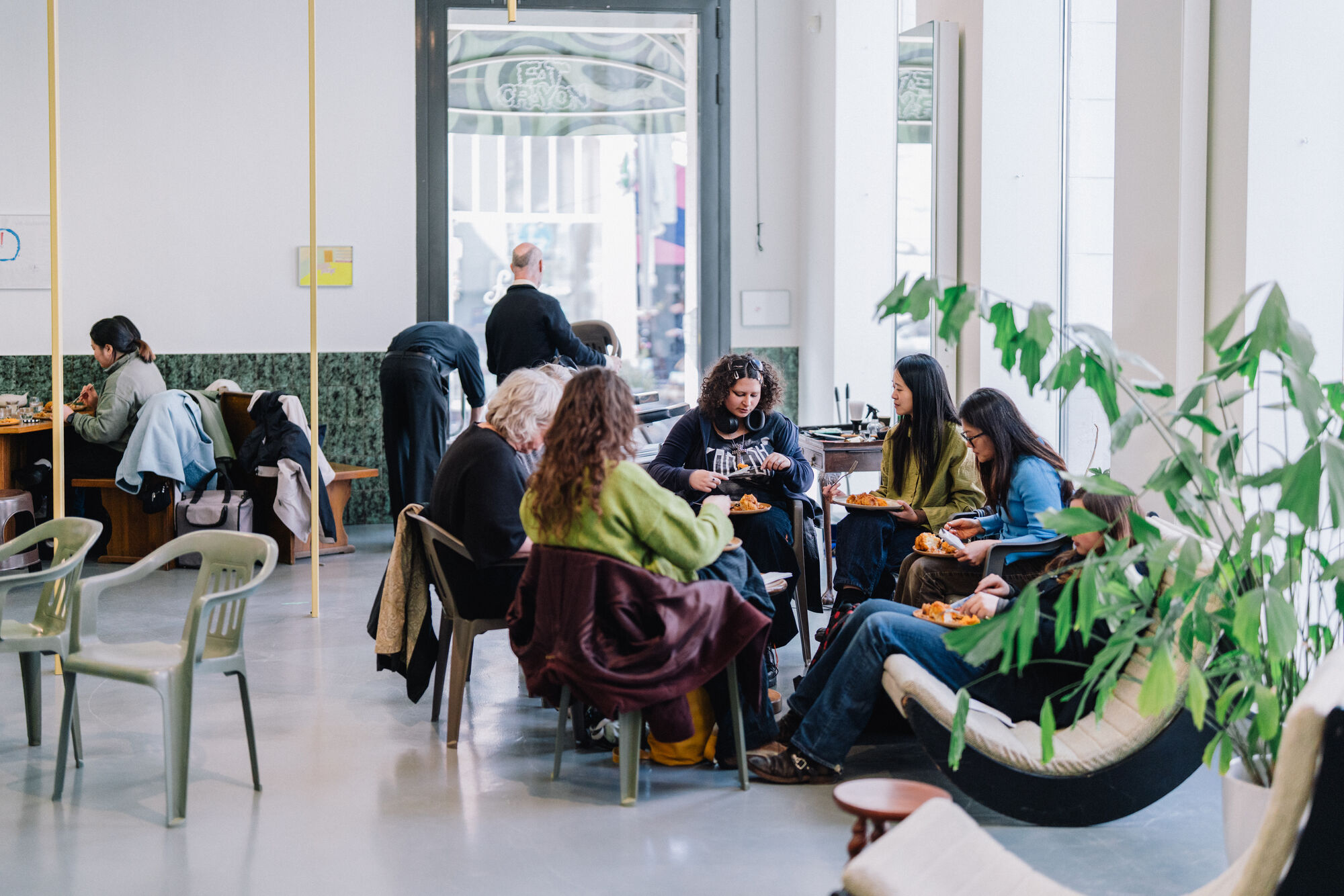
Suitcase Economy / Ground Floor, Kunstinstituut Melly, Witte de Withstraat 50, Rotterdam
* The dessert of Monthly Suitcase Economy Brunch #6 is made with a Turkish yoghurt starter brought from Deventer by Cihad and Levni Caner, who received it from Selma Güvelioğlu, who brought it from the Black Sea region. The kombucha is made with a SCOBY that was brought from London via Amsterdam by Sandra Kassenaar and David Bennewith, who received it from Simone Adler.




Kunstinstituut Melly will be closed to visitors from 5 to 23 October as we prepare the building for the opening of You will find us in the best places on 24 October.