Participants
Series

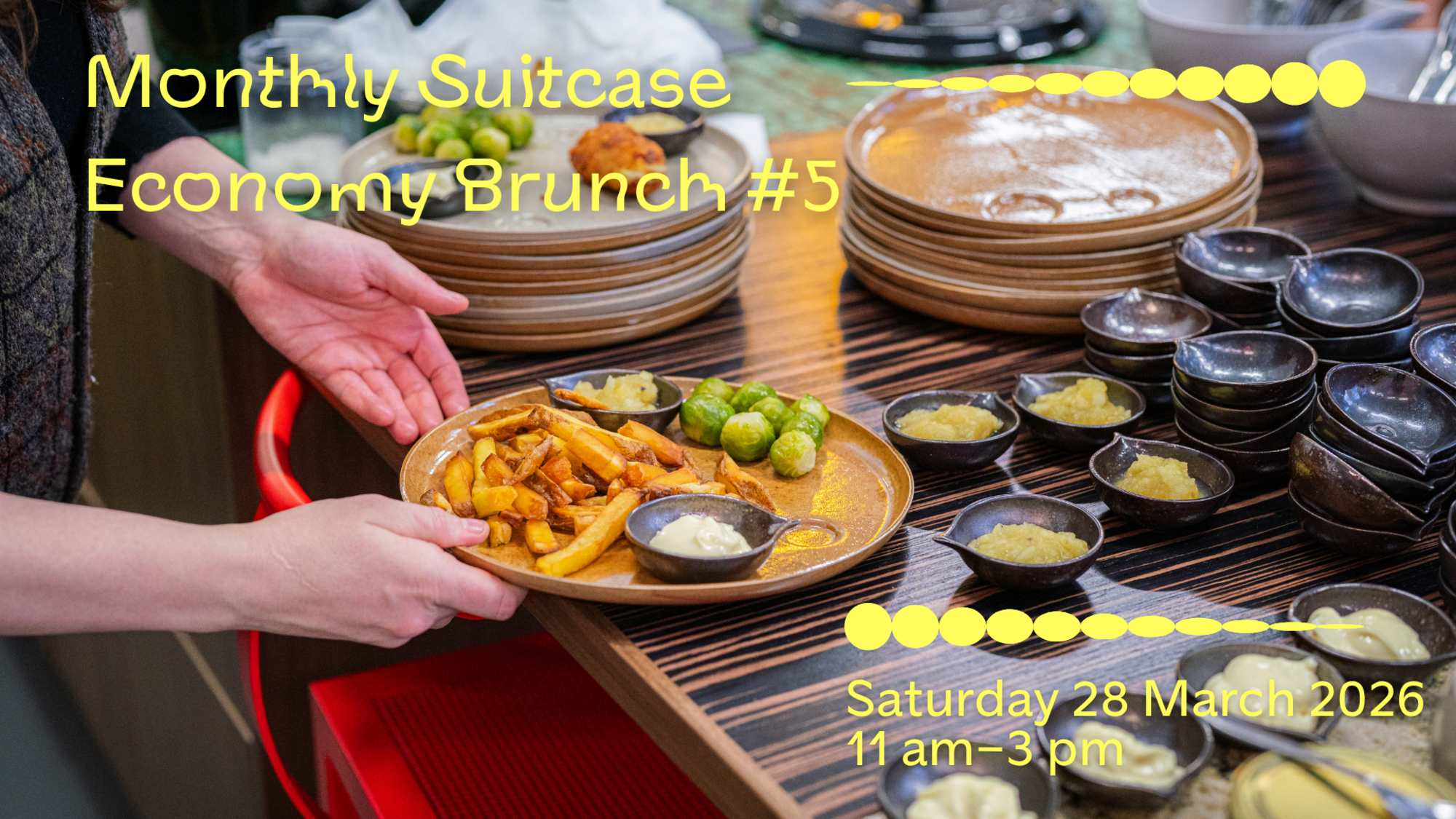
Monthly Suitcase Economy Brunch is a testing ground for experimenting with relationships, translation, economic models, and time through the preparation and serving of food. In this series artist Riet Wijnen is developing a method to build connections between different local daily contexts, past and present, by researching local preservation and fermentation histories.
These centuries-old methods for extending the lifespan of agricultural products through transformation are evident in various cultures' practices. As people moved around, these preservation and fermentation methods spread and evolved. For example, sauerkraut is based on the Chinese tradition of preserving cabbage in rice wine. These methods were developed when people were largely self-sufficient, relying on informal barter economies to provide themselves with food year-round.
Each brunch involves a process of fermentation or preservation and an ingredient transported from one place to another via suitcase*. The menu predominantly features food from Limburg, a province in the south of the Netherlands, as well as South Korea and South Africa, in these two countries collaborators determine the specific locations.
*Monthly Suitcase Economy Brunch #5 includes instant yeast brought from Cape Town by Kabelo Malatsie.
For Monthly Suitcase Economy Brunch #5, donna Kukama proposed a meal prepared by Riet. At the crossing point of us moving out of winter while the Southern Hemisphere, preparing for it, we make Ledambi steamed in a chicken or sugar bean stew. This warm and comforting dish, often served during the winter season in South Africa, is accompanied by morogo and sweet potato. For dessert, madila is served with elderflower or rhubarb syrup, a staple of Suitcase Economy.
Morogo is a vegetable dish made with wildly-grown leafy greens, traditionally preserved by boiling the leaves and drying them in the sun. Madila is fermented unpasteurised milk and is often consumed as a yoghurt-like drink.
In SeTswana, ledambi refers to a homemade steamed bread, also commonly known as idombolo in isiZulu. This bread can be made separately in a large pot or steamed in a stew or soup. Riet recalled her grandma’s cakes on a gas stove in an ALHO wonderpan. The pan has elements that circulate heated air around the cake in the middle. These methods are all precursors to the current steam and convection ovens.
10 euro, or 5 euro (drinks not included) if you exchange either a homemade fermented or preserved product, harvested produce from your own garden, or a specific ingredient for cultural dishes.
11.00-15.00 or until we run out.
Suitcase Economy / Ground Floor, Kunstinstituut Melly, Witte de Withstraat 50, Rotterdam.


Kunstinstituut Melly will be closed to visitors from 5 to 23 October as we prepare the building for the opening of You will find us in the best places on 24 October.