

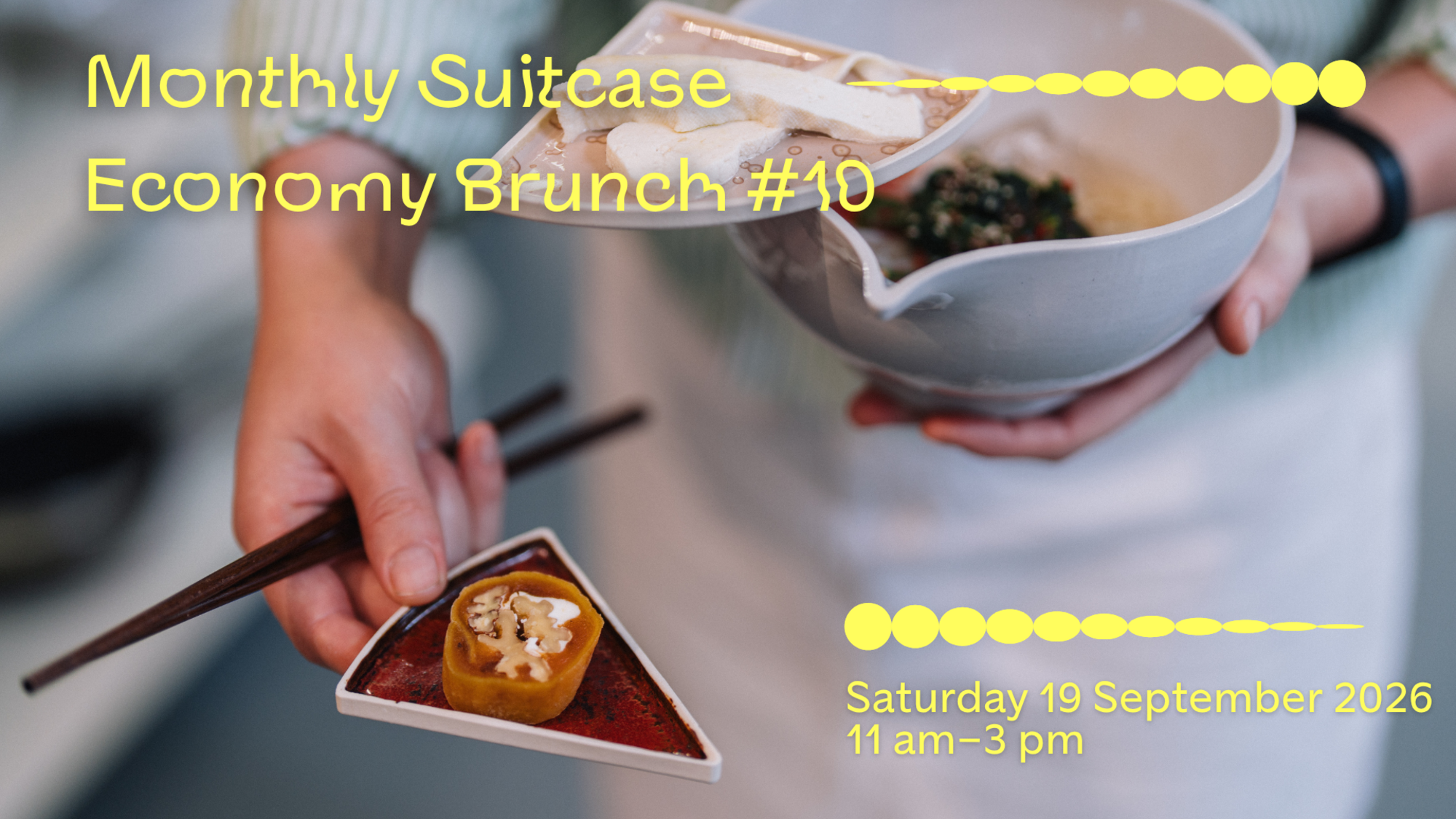
Come join us for the final edition of the Monthly Suitcase Economy Brunch. This Saturday, from 11:00-15:00, or until we run out!
Monthly Suitcase Economy Brunch is a testing ground for experimenting with relationships, translation, economic models, transformation and time through the preparation and serving of food. In this series, artist Riet Wijnen is developing a method to build connections among different local daily contexts, past and present, by researching local histories of preservation and fermentation.
These centuries-old methods for extending the lifespan of agricultural products through transformation are evident in the practices of various cultures. As people moved around, these preservation and fermentation methods spread and evolved. For example, sauerkraut is based on the Chinese tradition of preserving cabbage in rice wine. These methods were developed when people were largely self-sufficient, relying on informal barter economies to provide themselves with food year-round.
Each brunch involves a process of fermentation or preservation and an ingredient transported from one place to another via suitcase.* The menu predominantly features food from Limburg, a province in the south of the Netherlands where the artist was raised, South Korea, and South Africa. The specific regions in these two countries will be determined by collaborators of the Monthly Suitcase Economy Brunch series.
For Monthly Suitcase Economy Brunch #10, Tumelo Mtimkhulu proposed, in collaboration with his mum, Linah N Mtimkulu, a meal, which he will prepare with Riet Wijnen. The meal centers on ting ya mabele. In Sesotho, ting refers to ‘fermented, sour mixture or porridge’, ya means ‘of’, and mabele ‘sorghum’. This is served alongside sechu sa mohatla wa kgomo (slow-braised oxtail), mokopu (pumpkin), and morogo, a wild-grown leafy green, as well as two salads, one with apole (apple) and bitirut (beetroot), and the other with linaoa tsa KOO (butter bean), sehwete (carrot), and say li'pepper (bell pepper) with chutney. We will serve gemere, a fermented ginger beer made with pineapple.
Tumelo writes for the placemat on which this meal will be served: the meal shares some similarities with a South African meal called Seven Colors or Sunday kos, as it is composed of individual dishes that typically feature in a Seven Colours meal like morogo, meat, pumpkin, beetroot, apple salad, and a version of chakalaka. It is a collage of a meal, nameable only in its composite parts—refusing an all-encompassing name that would render it homogeneous and singular (which is, in itself, an impossibility).
The meal served specially underscores this as the final brunch of Suitcase Economy at Melly. It brings together different dishes and ingredients from previous iterations of the brunches that served food from South Africa. For the March brunch, donna Kukama proposed to prepare the morogo, while Lesedi Mogoatlhe introduced the fermented sorghum and pumpkin in June. In this final brunch, the morogo will reappear, but this time as a fresh vegetable.
The blatjang, based on a recipe from a Cape Malay cookbook, was served as a vinegar condiment with amagwinya during the Monthly Suitcase Economy Brunch #4 in February. In the upcoming meal, the blatjang will be used as a chutney mixed into the butter beans salad, which belongs to the family of chakalaka, a dish that is said to originate from Mozambican mineworkers. Other ingredients and dishes that reappear include stewed oxtail, stewed pumpkin, and fermented sorghum.
To prepare the South African ginger beer gemere, we followed Tumelo’s mum’s recipe and used a process of fermentation to brew it. This process includes the classic combination of tartaric acid and cream of tartar. Gemere is a form of wild fermentation driven by the natural yeasts and bacteria found on raw ginger, and sugar from raisins and pineapple. Tartaric acid and cream of tartar, on the other hand, chemically manipulate the process by acidifying it and breaking down sucrose into simpler sugars such as glucose and fructose, which makes it easier for the yeast to ferment.
The braised oxtail is prepared with an edible hot and cold delivering ointment created by Ima-Abasi Okon and Riet. This ointment was commissioned for the exhibition Suitcase Economy and involved the following steps:
From 19 February to 12 March 2026, a SCOBY was grown in front of the work 10 steps on 10 m, by stanley brouwn, displayed at the Van Abbemuseum.
Between 13 July and 2 September 2026, we fermented Ají Amaríllo, Naga Jolokia, Scotch Bonnet, and Madame Jeanette in kombucha liquid.
Finally, on 11 September 2026, we created an edible hot and cold delivering ointment with the fermented chili peppers.
10 euros, or 5 euros (gemere included) if you bring a homemade fermented or preserved product, the recipe, harvested produce from your own garden, or a specific ingredient for cultural dishes.
11:00-15:00, or until we run out
Suitcase Economy / Ground Floor, Kunstinstituut Melly, Witte de Withstraat 50, Rotterdam
*Monthly Suitcase Economy Brunch #10 is made partly with mabele brought from Johannesburg by Lesedi Mogoatlhe.
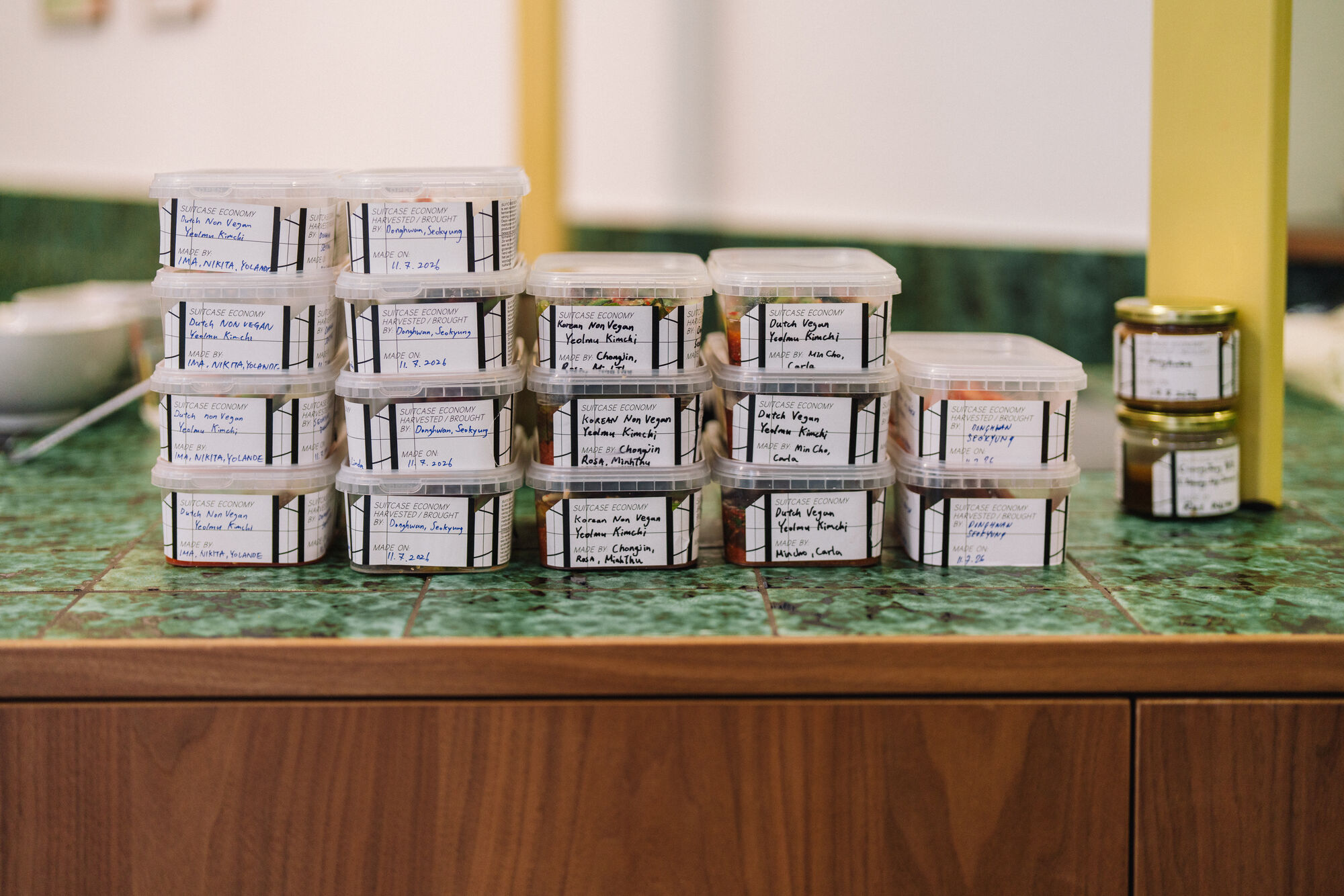
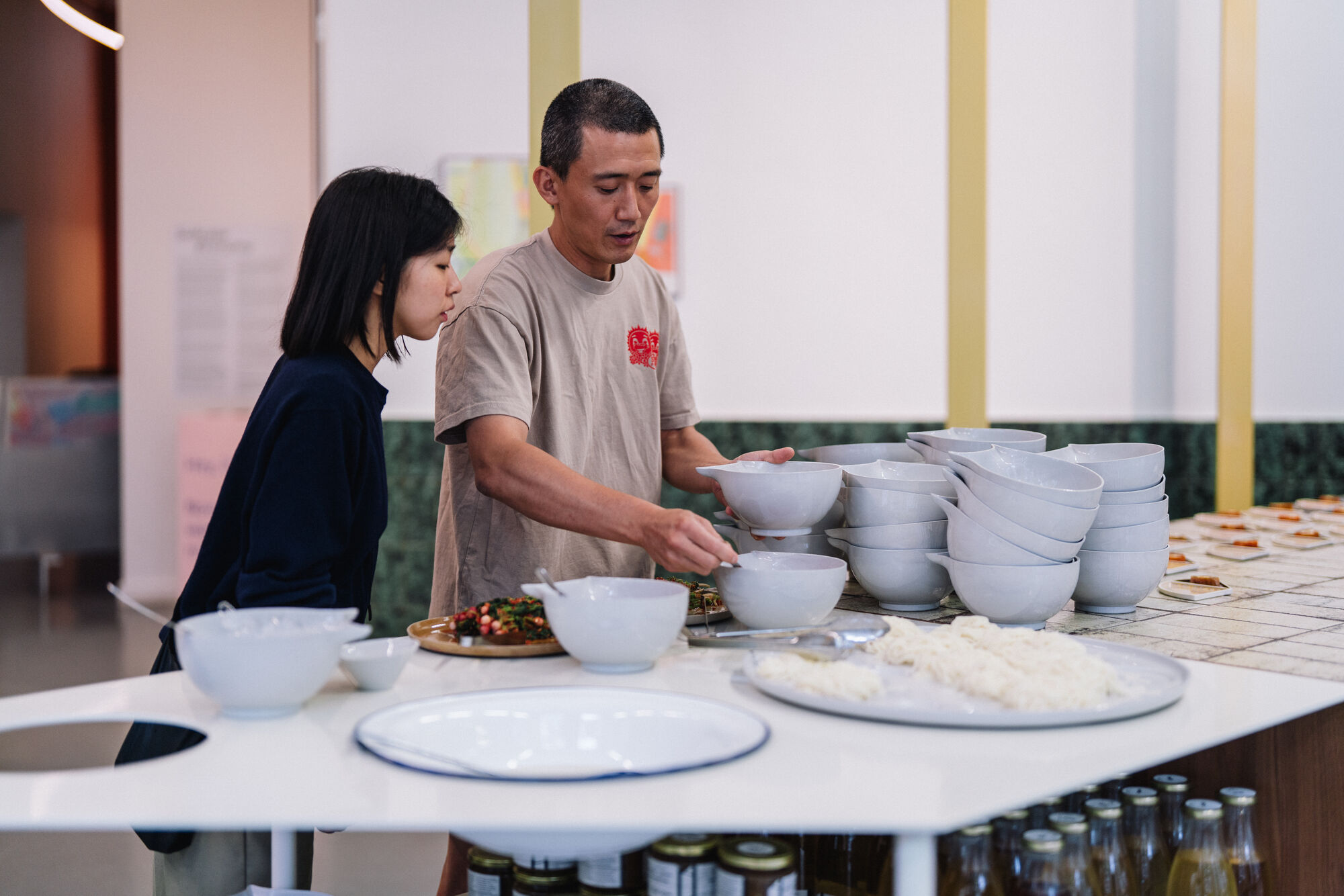
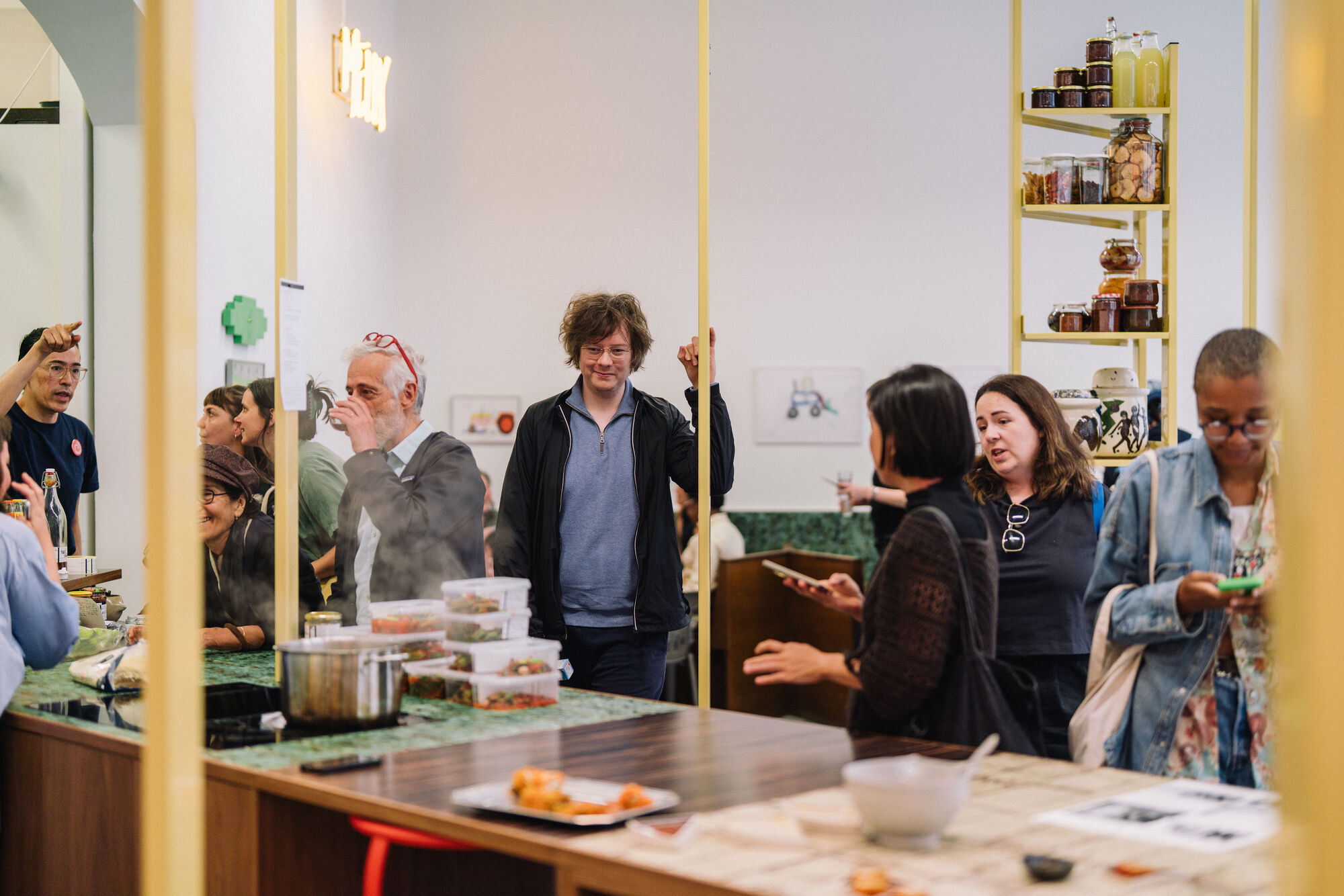
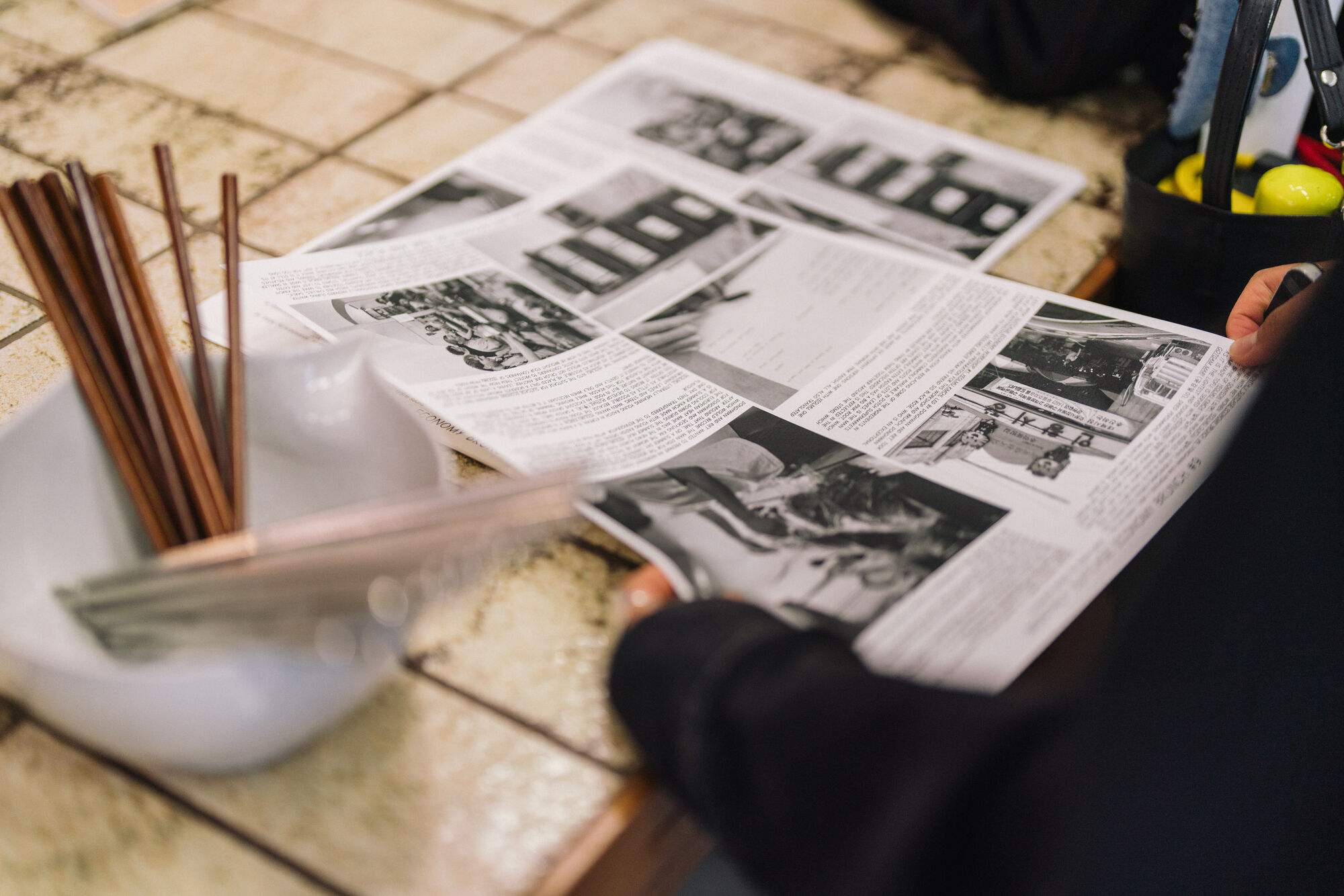
*Images from Monthly Suitcase Economy Brunch #9, Saturday 18 July 2026, where Donghwan Kam cooked together with Riet Wijnen. They prepared Yeolmu Guksu (열무국수), a refreshing Korean cold noodle dish made with somyeon (소면), thin wheat noodles, served in an icy, tangy broth made from the brine of yeolmu kimchi (열무김치), young summer radish kimchi. The meal was accompanied by homemade tofu (dubu, 두부) served with cheongjang (청장), a young soy sauce, and gotgam mari (곶감말이), dried persimmons with walnuts and cream cheese.




Kunstinstituut Melly will be closed to visitors from 5 to 23 October as we prepare the building for the opening of You will find us in the best places on 24 October.