George Mahashe: Vuragelameshoga—Leḽago la vakhegulu
Saturday 24 October 2026 — Sunday 28 March 2027

Nna re ya boḍa boḍa, ra wela mesheni ya vakhegulu, ra ke seva seva— Thwahadima Mukhegulu wa Muloi! A dzuha ga meloro kheṱhageni, myana a phela!
Va re: Re soga diḓou re khe na madi a vuhosi! Vakhegulu va re: Leetjha vaana va mba va thabe, va ḓo beba Khosi!
Va re re soga diḓou re khe na madi a vuhosi!— ḍaula ya re muremuhulu (1011: Young man down—nḍwa mulogoni— khwara—thekha musha—zwe ḓo luga musheni wa vakhegulu—phegu re lora ga kheṱhageni—mullo u ḍuga ga nḓe, leḽagoni ge gosha ya hu phebela!
Vuragalameshoga ge mo vakhegulu va dulaho! Vaana re ya wela! Ra sevelana zwa ga hae, bula ya na! Nna re ya boḍa boḍa! Re thaba le vamye! Ha Khosi re ya hu losha fhela.
This poem recounts the method by which knowledge is shared among the inner circles of the Balobedu people, who live primarily in South Africa’s Limpopo province. It cites the old women’s courtyards as spaces where food, justice, play, and medicine all share space. These are places you go to breathe, leave your kids, and prepare food.
It is also a place where people are reprimanded and placated. The poem establishes “hu boḍa boḍa” as a methodology––a process you undergo before or after visiting the old men’s court. The courtyard serves as the central point of this meandering (hu boḍa boḍa). It is a place one ought to frequent; as they say Ga Khelovedu: “Rain comes when we play with others—honu re khe seva seva!”
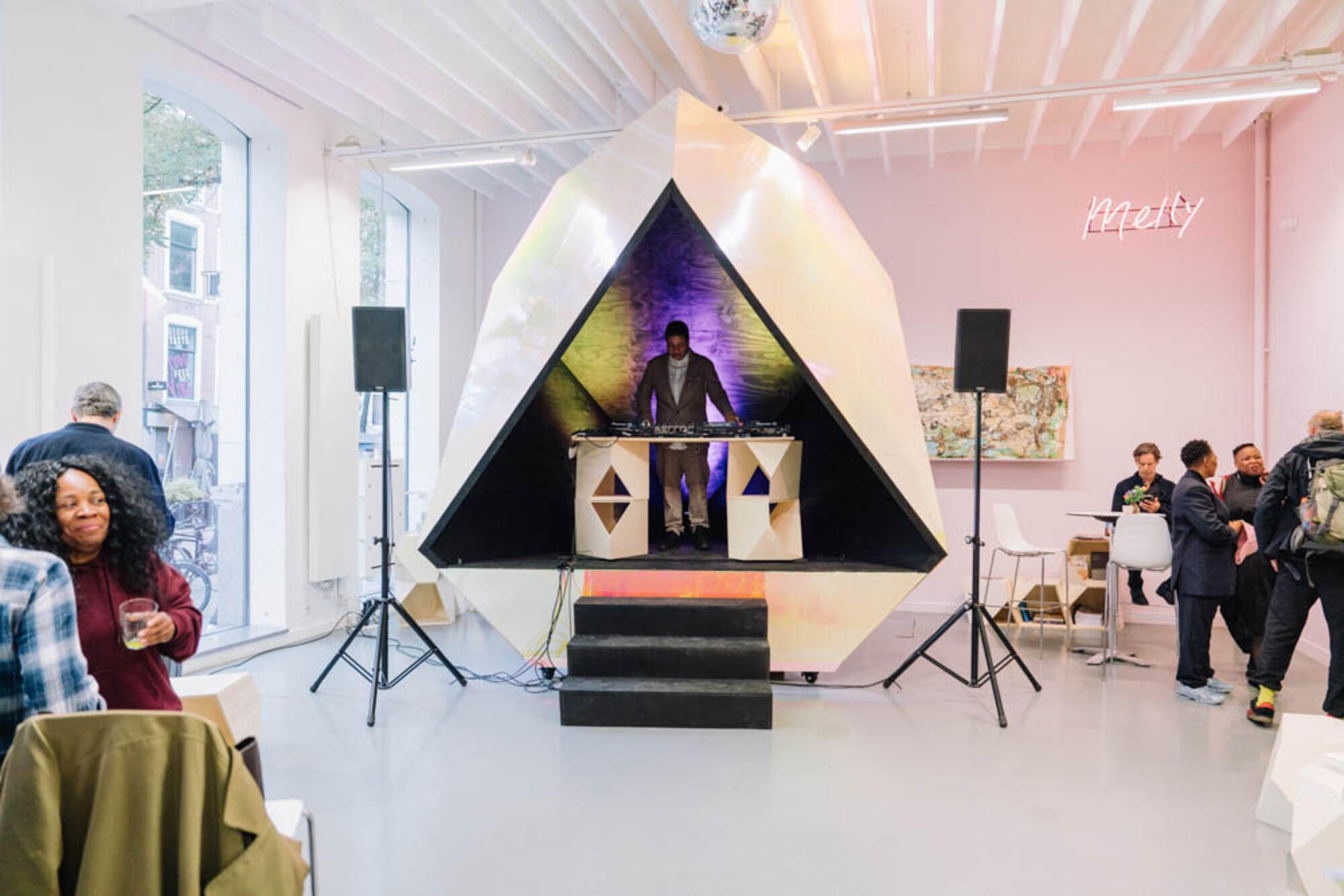
Leḽago la vakhegulu has movable parts, which, when at rest, has three court “yards”. Two small, secluded yards (for practice) are located behind the central Dürer solid (“hut”), while a larger, communal yard (for shining) occupies the main space. The black interior of the hut references Tjhidi (ash), while the exterior reminds us of the light. Together, these represent the two constants of any good medicine.
The space is safeguarded and encouraged by the old women (vakhegulu). These women are neither revered matriarchs nor bitter, proud upholders of patriarchy; rather, they are individuals concerned with maintaining balance and upending hierarchies. It is a place where decisions are made afresh. Rather than functioning as a rigid system, it is a fluid space connecting those ahead (ancestors), the living, and those yet to come.